

Retail sales operations, Los Angeles
Retail sales built around real buyers
Retail sales is one half of what Easy Killz LLC does, and it is the half most people never see. It is ordering decisions, channel choices, and the daily question of what deserves shelf space.
Four channels, four different buyers
The context matters. Music retail in 2026 runs across specialty shops, mass-market aisles, artist web stores, and merch tables, and each channel has a different buyer standing in front of it. A crate-digger in a neighborhood shop is not the same shopper as someone who adds a CD to a Best Buy cart on the way to checkout, and neither of them behaves like a fan buying a tour-only pressing directly from the artist.
Easy Killz LLC is registered in California and works the U.S. market, where all four of those channels are live at once. That means the retail plan cannot be one plan. Ordering rhythm, presentation, and promotion change channel by channel, and the working decisions below are the ones we come back to every week.
Assortment is a bet you make weekly
Every retail operation decides what to carry, and that decision gets remade constantly. A title that sold in March can sit untouched by June. A release with three versions needs a reorder plan per version, not per album. We treat assortment as a working list rather than a fixed catalog: what moved last month, what regulars asked for, what a distributor can actually ship. Getting that rhythm right is most of the job.
Store and online channels do different work
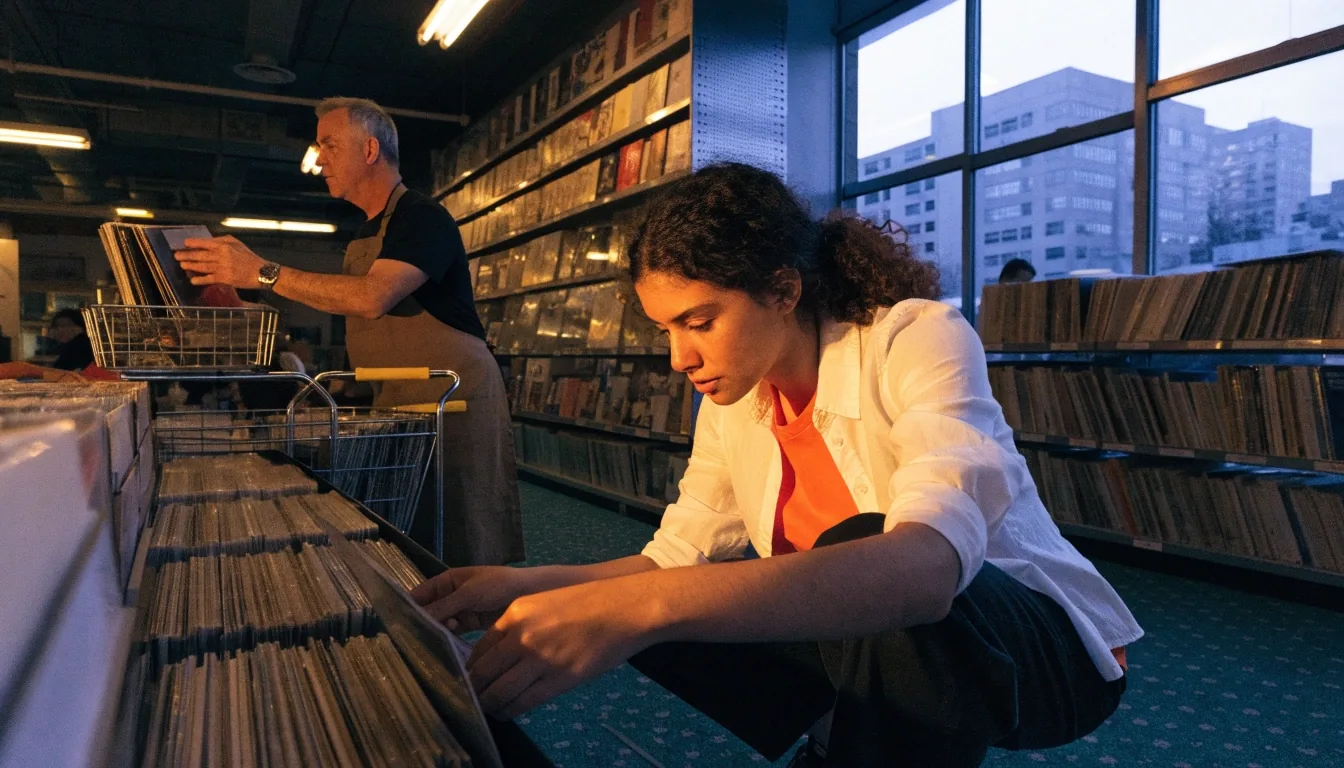
A physical store sells discovery. Someone walks in without a specific title in mind and leaves with two. An online channel sells intent: the buyer already knows what they want and is comparing price and shipping.
That difference changes everything about presentation, from how stock is arranged to what gets promoted. Specialty shops lean on the first. Direct-to-fan stores lean on the second. Most sellers now run both and have to keep them from cannibalizing each other.
- Discovery buying
- Crate order, in-store signage, staff picks, and a listening station do the selling when the buyer arrives without a title in mind.
- Intent buying
- Stock accuracy, shipping terms, and bundle pricing do the selling when the buyer already knows the title and is comparing.
What mass-market retail still does well
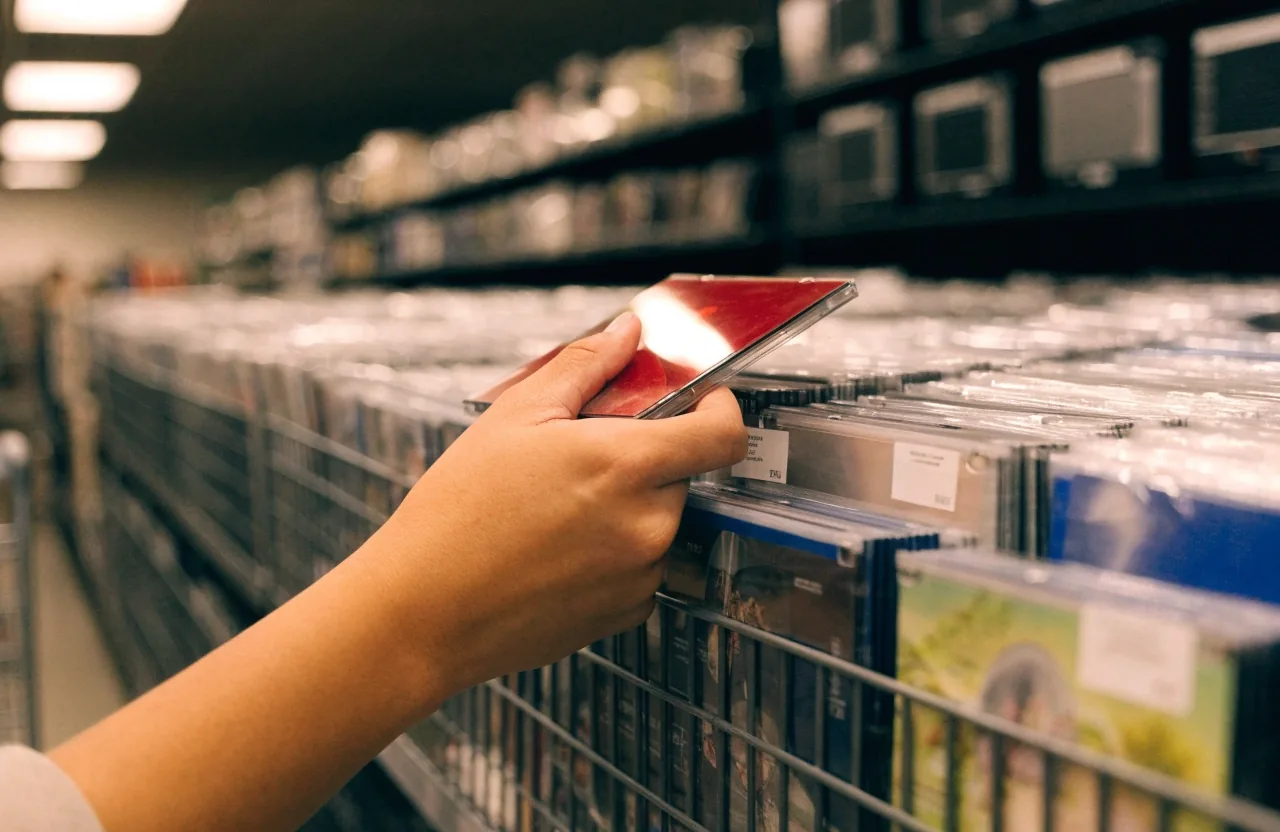
Best Buy and similar big-box retailers remain relevant to physical music, mainly through impulse and gift purchases. Luminate reported that the mass market captured nearly 30% of physical sales in the first half of 2026, driven in part by K-pop demand.
Big-box retail competes with specialty shops and direct-to-fan sales rather than replacing them. Its strength is foot traffic and cross-category shopping: a CD added to a cart that already had something else in it.
Merch tables are a retail format too
The merch table runs on scarcity and timing. A tour-only design, a limited pressing, a bundle tied to a release date: these create urgency that a permanent shelf cannot.
-
Direct-to-fan margin
Selling straight to the fan keeps margin and control with the artist and the label, and it lets a run be sized to real demand instead of a distributor forecast.
-
Physical retail immediacy
A shop serves the buyer who wants the record today and would rather not wait on shipping. That is a different transaction with a different price tolerance.
-
The shared signal
Both channels read the same signal. Superfans will pay for a physical object, and they will pay more for one that will not be restocked.
K-pop changed the SKU math
K-pop releases turned the physical album into a collecting category. Photocards, packaging variants, and multiple versions per release mean a single title can require several order lines and a separate reorder decision for each. That is a real operational difference from a standard CD release.
It also explains part of why mass-market retail gained physical share: the category brought buyers into general stores that might not have carried the title otherwise.
- Photocards A single release can hold several randomized cards, so one title becomes several purchase decisions for the same fan.
- Packaging variants Different covers, booklets, and box sizes mean each version is its own order line, with its own stock count on the shelf.
- Reorder rhythm Versions sell out at different speeds, so a reorder has to be decided per version instead of per album.
- Store fit The format pulls a general-store shopper toward a music aisle they would otherwise walk past.
Where superfans fit into planning
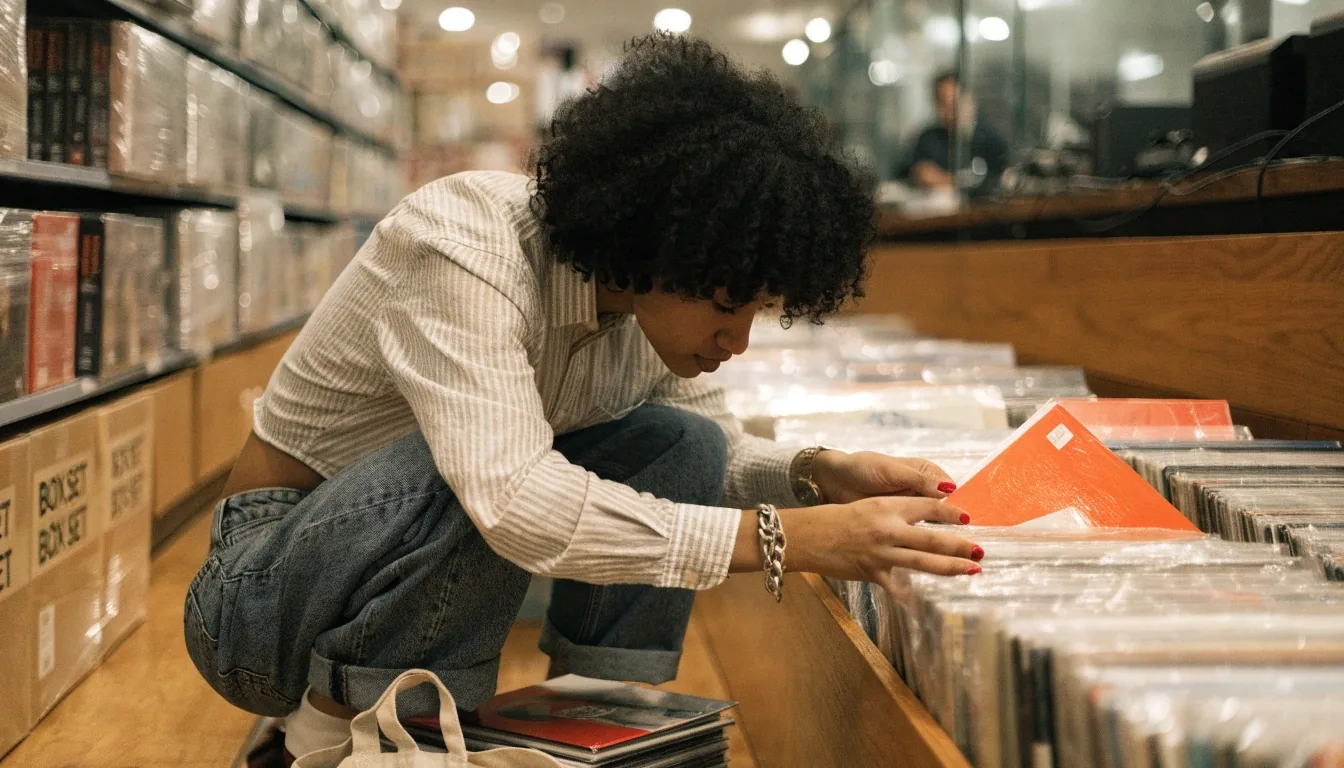
Luminate estimated about 20% of U.S. music listeners qualify as superfans, engaging through merch, physical music, concerts, fan clubs, and social sharing. Retail planning built around that segment looks different from planning built around reach.
You stock deeper on fewer titles. You plan for a limited drop instead of a steady seller. You assume the buyer already knows the catalog and is looking for the version they do not have.
See how we plan merch dropsThe economics of a shelf
Shelf space has a cost even when the shelf is free. Inventory ties up capital, slow titles age, and returns eat margin. That is why a retail operation ends up saying no to more products than it says yes to.
The useful discipline is knowing which titles earn their space by turning over, and which earn it by bringing the same customer back every month. Both can be worth carrying, but not for the same reason.
What we ask before adding a category
-
Who is the buyer, and do they already shop here?
If the answer is nobody we currently reach, the category is a new audience problem before it is a stocking problem.
-
Can the category turn over within a reasonable window?
Titles that sit for a season tie up cash and take space from something that would have moved. Slow movers need a reason to stay.
-
Does it need a sales floor we do not have?
A demo room or a listening station is a real requirement, and a category that needs one waits until we can support it.
If the answers do not line up, the category waits. That is a slower approach than chasing every trend, and it is the one that keeps a retail operation solvent.
Returns, damages, and the unglamorous parts
Physical media arrives damaged. Vinyl warps, jewel cases crack, and packaging gets crushed in transit. A retail operation needs a returns process before it needs a marketing plan.
That process covers the distributor, the customer, and the accounting, and it is the part of retail that never shows up in a trend story. Handling it well is what keeps a buyer coming back after a bad shipment.
Distributor side
Damage claims and replacements get logged against the order so credits and reorders stay accurate.
Customer side
A swap or refund handled the same week is what keeps a buyer willing to order from the shelf again.
Accounting side
Returns change margin, so they are tracked per title rather than as a single monthly write-off.
Packaging side
Sturdier mailers and correct box sizing cut the damage rate before it becomes a returns problem.
Questions we get about retail planning
Short answers to the practical side of ordering, stocking, and channel choice.
How often does the assortment actually change?
It is reviewed on a rolling basis rather than once a year. New releases, sell-through on existing titles, and what the distributor can ship all move the list. A title that is not turning over is a decision, not a waiting period.
Should a small seller run a store and an online shop at the same time?
Often yes, but with different jobs. The store handles discovery and the online shop handles intent. The risk is letting one discount against the other, so pricing and exclusives need to be set deliberately instead of copied across.
Why do K-pop titles need more order lines than a standard CD?
Because each version is a separate item with its own cover, packaging, and often its own photocards. They sell at different rates, so they are ordered and reordered as separate items even when they come from the same release.
What matters most in a returns process?
Speed and record keeping. The customer needs a swap or refund without a long back-and-forth, and the distributor claim needs to be filed against the right order so the credit actually lands.

Talk through your retail plan with us
Tell us what you carry, which channels you run, and where the ordering decisions get stuck. We are happy to compare notes on assortment, reorder rhythm, and returns before anything changes.
Easy Killz LLC · 1329 N Vista St, Apt 106, Los Angeles, CA 90046, USA · +995 574 011 852 · [email protected] · Monday to Friday, 9:00 AM – 6:00 PM