
Condition
Frets, neck relief, electronics, and finish wear decide both the offer and the asking price. An honest assessment protects the buyer who comes next.
1329 N Vista St, Los Angeles, CA
Instruments & audio gear
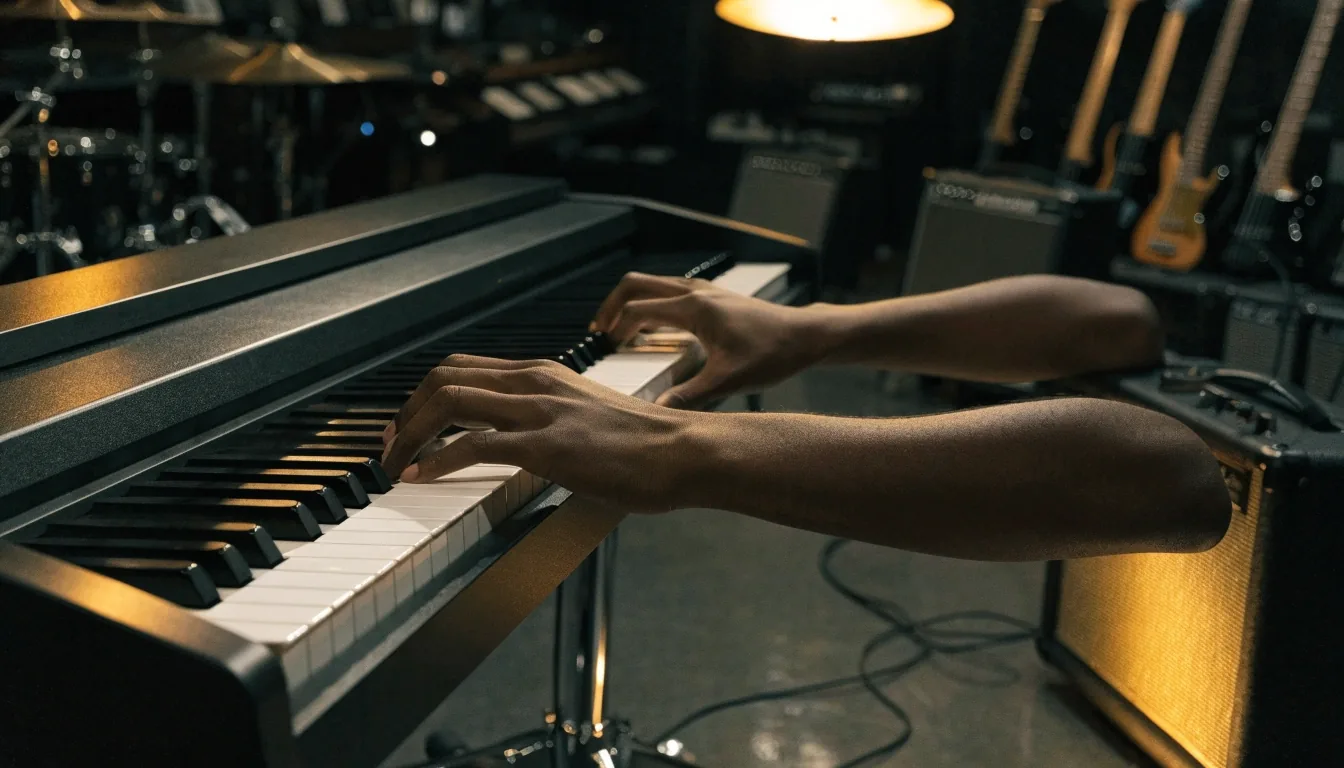
A guitar has to be held. A keyboard has to be played. This is how the instrument side of music retail actually works, from the electrics that built the category to the starter keyboards that bring new players in.
What this page covers
Instruments and audio gear are the other half of music retail, and they behave nothing like recorded music. A guitar needs to be held. A keyboard needs to be played. This page covers the categories that carry a music store, from the electric guitars that defined the market to the starter keyboards that bring new players in.
Solid-body electric guitars, the long-running center of the wall and the first thing most visitors walk toward.
Digital pianos and keyboards, sold as much on room fit and quiet practice as on tone.
Trade-ins and pre-owned stock, which keep gear circulating and give a floor a second inventory stream.
Headphones, interfaces, monitors and cables, the accessories that complete a purchase and repeat.
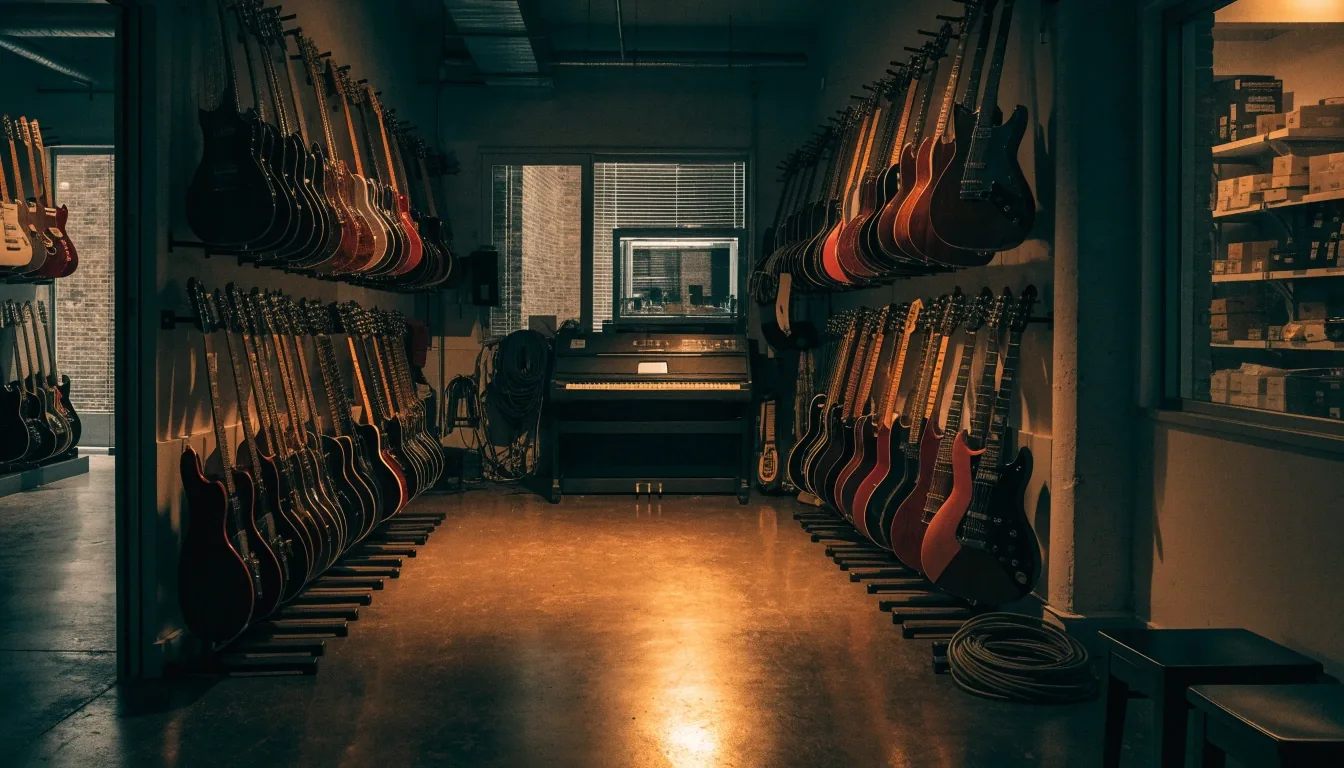
Online sellers compete on price and selection. The floor competes on the ten minutes before a purchase.
That gap is not sentiment. It is the part of buying an instrument that cannot be transferred to a product page, and it is the reason a physical music retailer still has a job to do.
Why the floor still matters
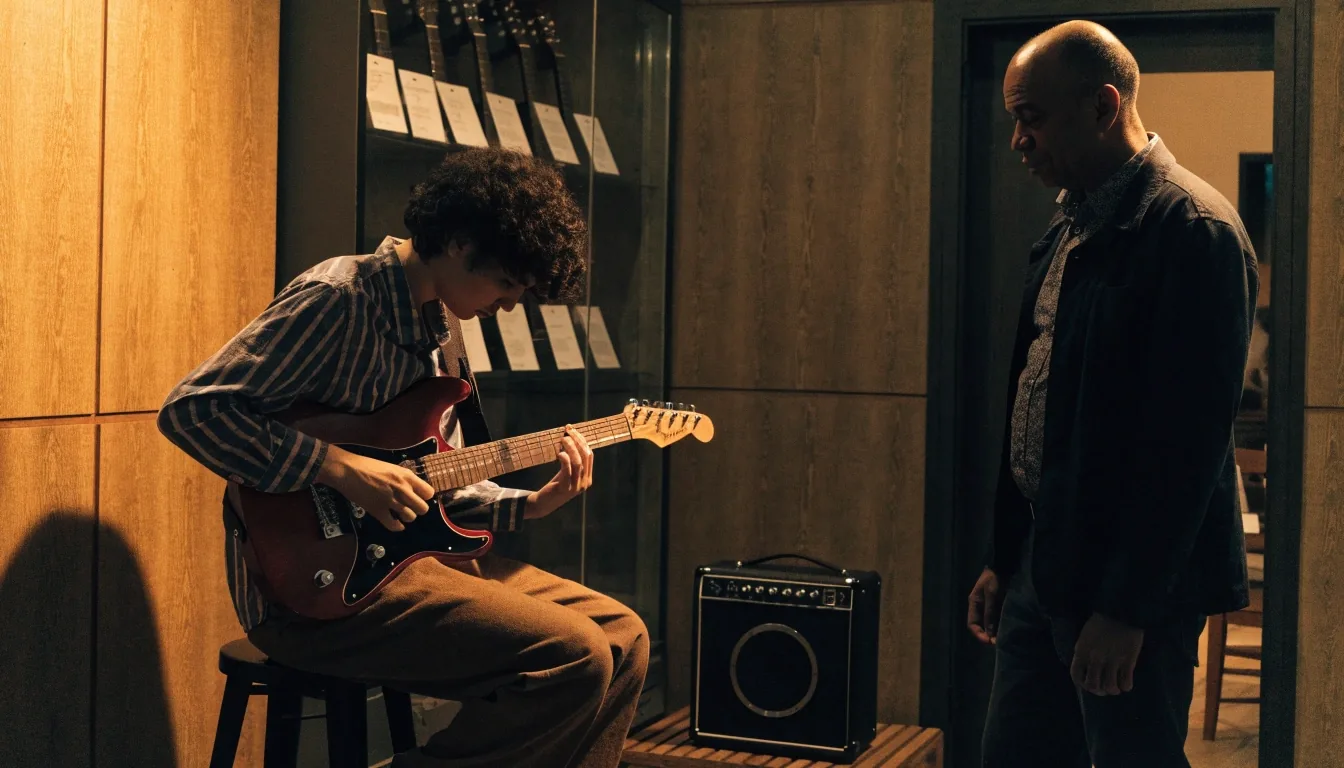
Guitar Center remains one of the best-known instrument retail brands in the United States, and its model explains why. Instrument retail in 2026 still runs on demoing, trade-ins, and a beginner-to-pro pathway. A buyer wants to know how a neck feels, how an amp responds, whether a keyboard action is heavy or light. None of that transfers through a product page.
Online sellers compete on price and selection. The floor competes on the ten minutes before a purchase, and on the conversation that follows it. A store that can put an instrument in someone's hands, answer the next three questions honestly, and offer a setup or a lesson afterward is selling something a listing page cannot.
Iconic electrics
The Fender Stratocaster is one of the most recognized electric guitars in modern music history, and it still anchors the category. Instrument buying decisions hinge on feel, sound, brand recognition, and resale value.
A model that holds value gives the buyer an exit, which changes how much they will spend going in. That is why iconic models keep their place on the wall even when newer designs outperform them on paper.
The customer, not the sale
Most instrument sales are not to professionals. They are to beginners, parents, and returning players. That pathway runs from a first instrument to a second one, and the second purchase is where a retailer either keeps the customer or loses them.
Usually bought on price and guidance. The buyer needs something playable that will not discourage them in the first month.
The service layer is what keeps a customer after the sale instead of letting the relationship go quiet for two years.
An upgrade, an amp, or a second instrument. This is the purchase that tells a retailer whether the first one worked.
Old gear comes back to the floor, gets evaluated, and starts the cycle again for someone else.
A store that sells someone a guitar and then sells them nothing for two years is running a one-time transaction business. The better model is service, setup, and lessons, which is exactly what physical retail is positioned to provide.
Keys and the home player
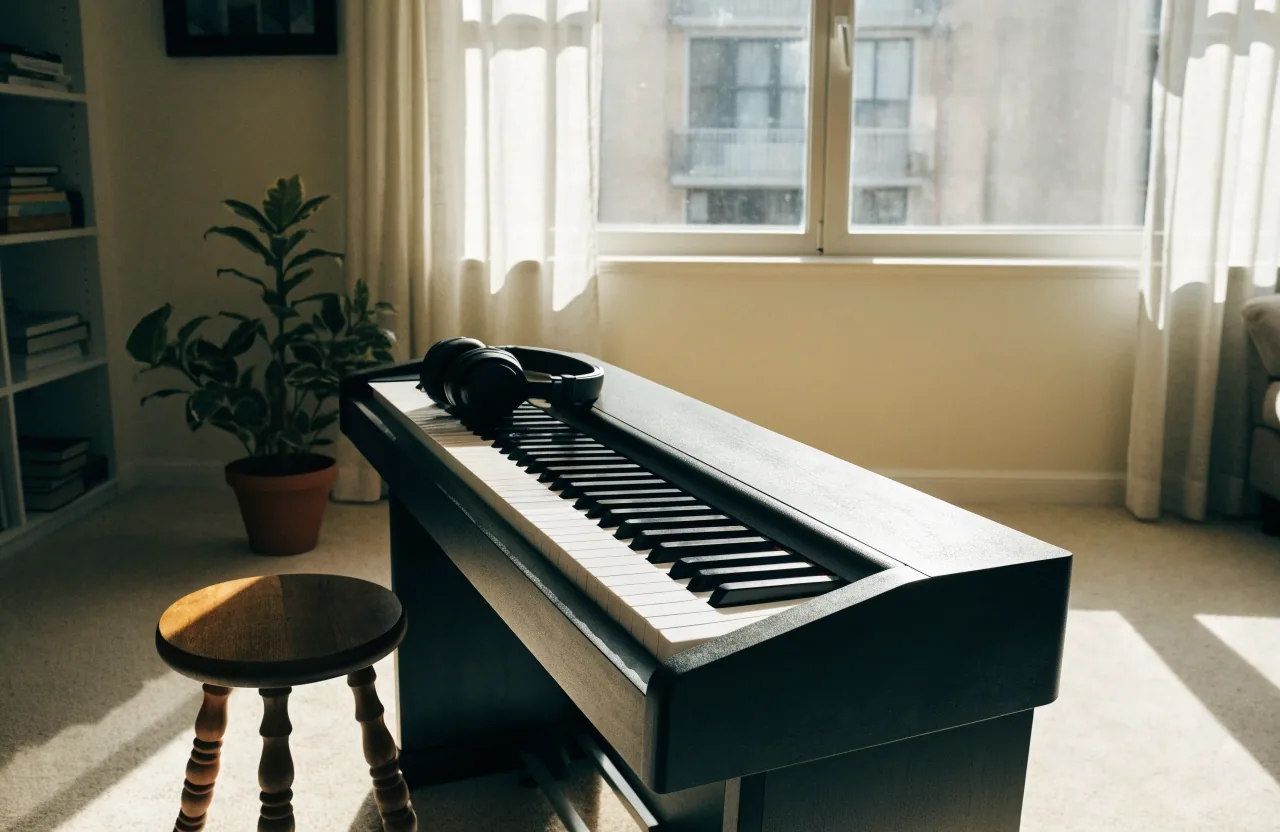
Yamaha's P-series is widely associated with entry-level digital piano buying, and the P-45 sits at the front of that category. Keyboard retail is shaped by portability, practice features, and home setup needs.
A keyboard that fits on a desk, works with headphones, and does not need a truck to move gets used. A buyer in an apartment is not choosing on sound alone. They are choosing on whether the instrument fits their actual room.
What household buyers ask first
Second inventory stream
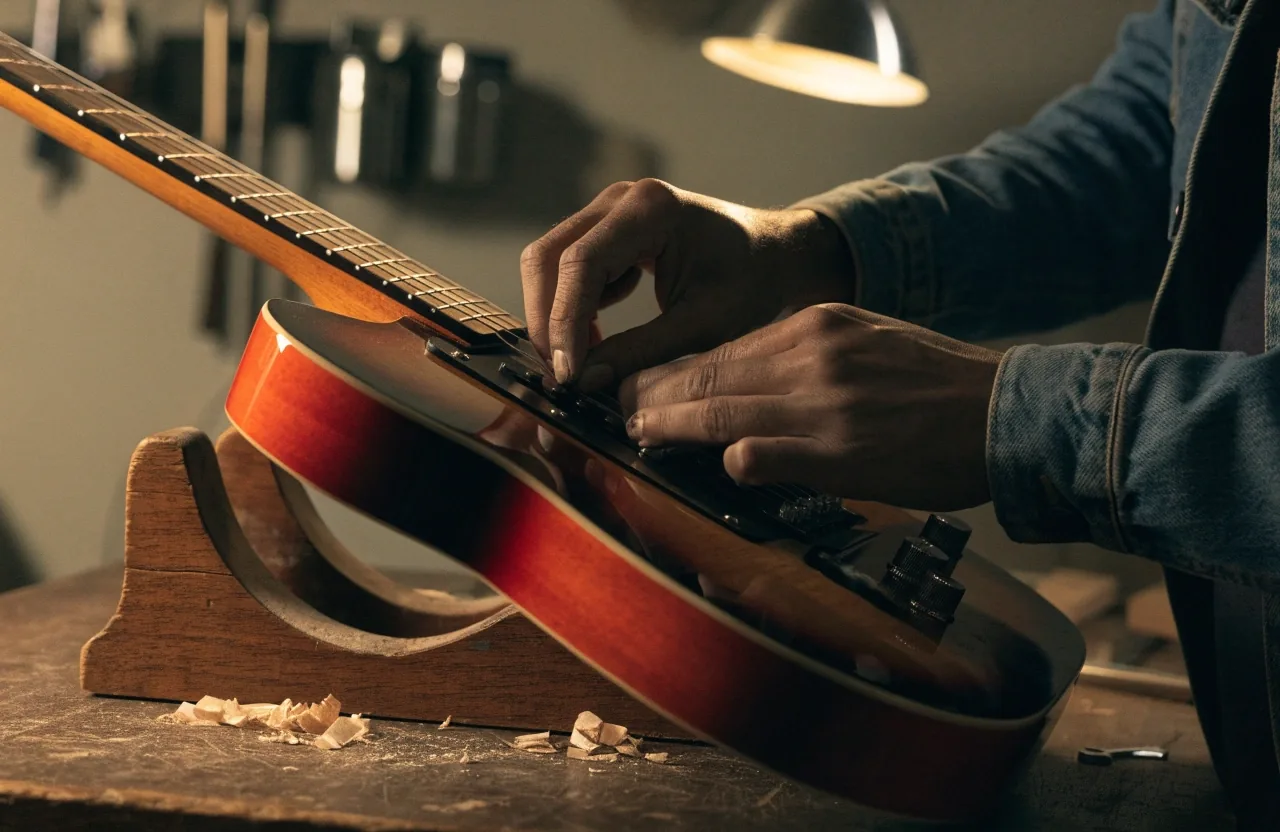
Trade-ins keep gear circulating and give retailers a second inventory stream. A used instrument carries no manufacturing cost and often has better margin than a new one. It also carries risk, and handling that risk well is one of the clearest differences between a gear retailer and a general electronics store.
Frets, neck relief, electronics, and finish wear decide both the offer and the asking price. An honest assessment protects the buyer who comes next.
Who owned it, whether it has been modified, and whether the original parts are still with it. Small details that change what a used instrument is worth.
Almost every used instrument needs adjustment before it plays its best. That labor lands on the seller, and it is what makes a trade-in worth doing.
Handling that well requires someone who can evaluate an instrument quickly. That skill is one of the clearest differences between a gear retailer and a general electronics store, and it is not something a pricing spreadsheet replaces.
Accessories and studio
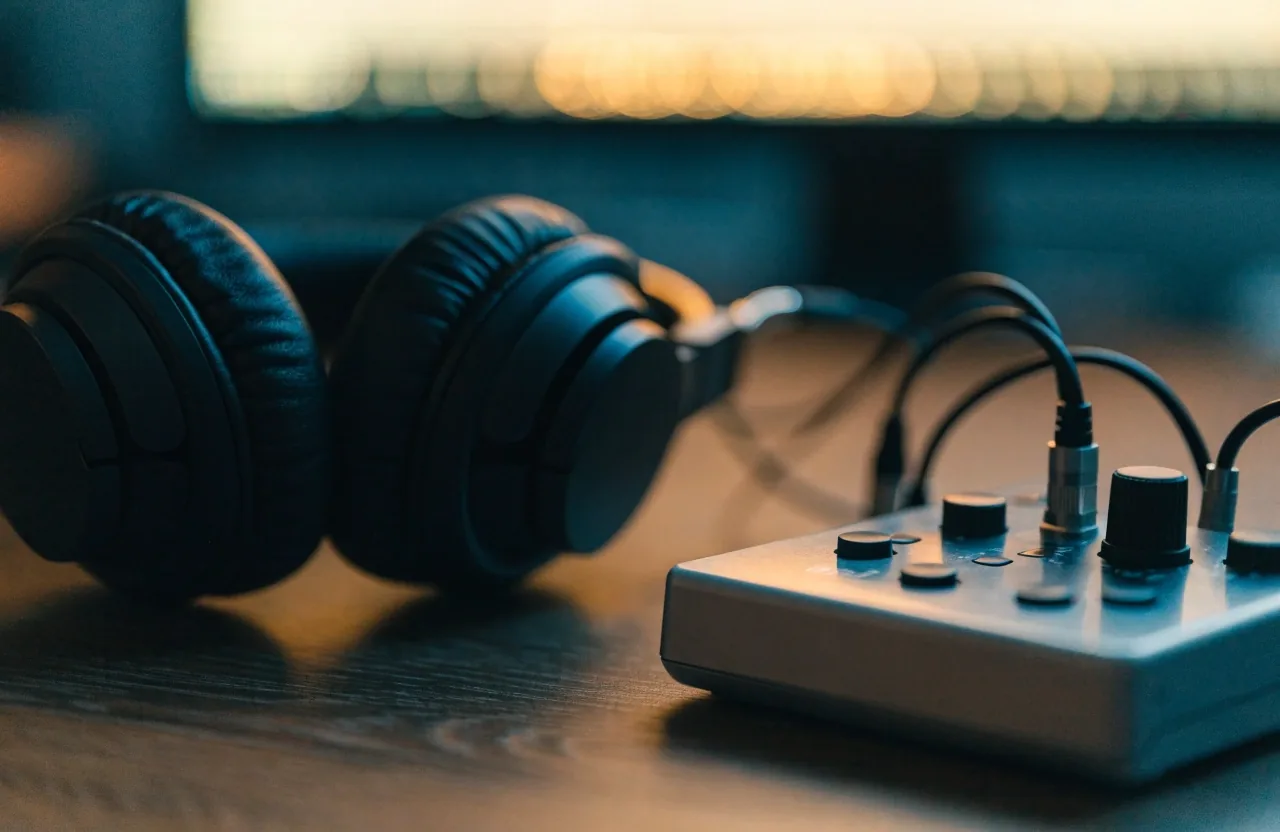
Headphones, interfaces, monitors, and cables fill out the category. These purchases tend to follow a different pattern than instruments: a buyer researches, compares, and often buys online.
What a physical retailer can offer is the chance to listen and compare in person. That is worth something for headphones in particular, since fit and comfort decide whether a pair gets used at all, and no spec sheet settles that question.
Researched online, bought in store
Monitors and headphones reward a listening session before the decision.
Bought on repeat
Strings, cables, and picks turn over constantly and keep customers coming back to the counter.
Four buyers, four questions
A retail floor that tries to serve all four of these buyers with the same presentation usually serves none of them. Separating those buyers, even by aisle placement, changes what actually sells.
Decides on
Reliability and repairability
Knowing the parts exist and who fixes it when it fails on a gig night.
Decides on
Price and guidance
Plain answers about what to start on, and permission to buy the simpler option.
Decides on
Provenance and condition
A clear history for the instrument and no surprises in the finish or electronics.
Decides on
Room fit and budget
An instrument that suits the space it will live in and can be practiced quietly.
Gear ties up more capital per unit than recorded music, and it takes up more room. That makes depth risky. A store that stocks twenty of one model has made a bet that a different model cannot fix. The usual approach is one or two of the models that move and a broader selection of accessories, strings, and consumables that turn over constantly. Consumables pay the rent while instruments bring people through the door.
An instrument that holds up over time is worth more than one that impresses on day one. Resale value, repairability, and parts availability all factor in, and none of them show up in a spec sheet.
A beginner who buys something that can be maintained and eventually resold has a better path than one who buys on price alone. That is a long view of a purchase, and it is one a retailer can actually explain.
Questions we hear
The questions that come up most often when someone is choosing a first instrument or replacing one.
Both can work. A used instrument often costs less and can hold value better, but it needs an honest condition check and usually a setup. New gear is simpler to start with and easier to return. The deciding factor is whether someone can look the instrument over before you buy it.
The action and the speakers are the difference. A digital piano is built to feel like a piano under the hands and to be played without extra equipment. A keyboard is built to be portable, which usually means a lighter action and a smaller speaker or none at all.
Bring music you know well. Familiar tracks make differences in fit, comfort, and low-end response much easier to hear than anything played for you in the store. Wear them for several minutes, not thirty seconds, because comfort is what decides whether a pair gets used.
Often yes. String height, intonation, and neck relief all shift with climate and shipping, and a small adjustment can be the difference between an instrument that is frustrating to play and one that is not. Ask what a setup includes and how long it takes before you commit.
Easy Killz LLC is registered in California and works across retail sales and music. If you want to talk through instruments, audio gear, or how a floor is stocked, the contact page is the fastest route. We answer Monday to Friday, 9:00 AM to 6:00 PM.
1329 N Vista St, Apt 106, Los Angeles, CA 90046, USA · +995 574 011 852 · [email protected]